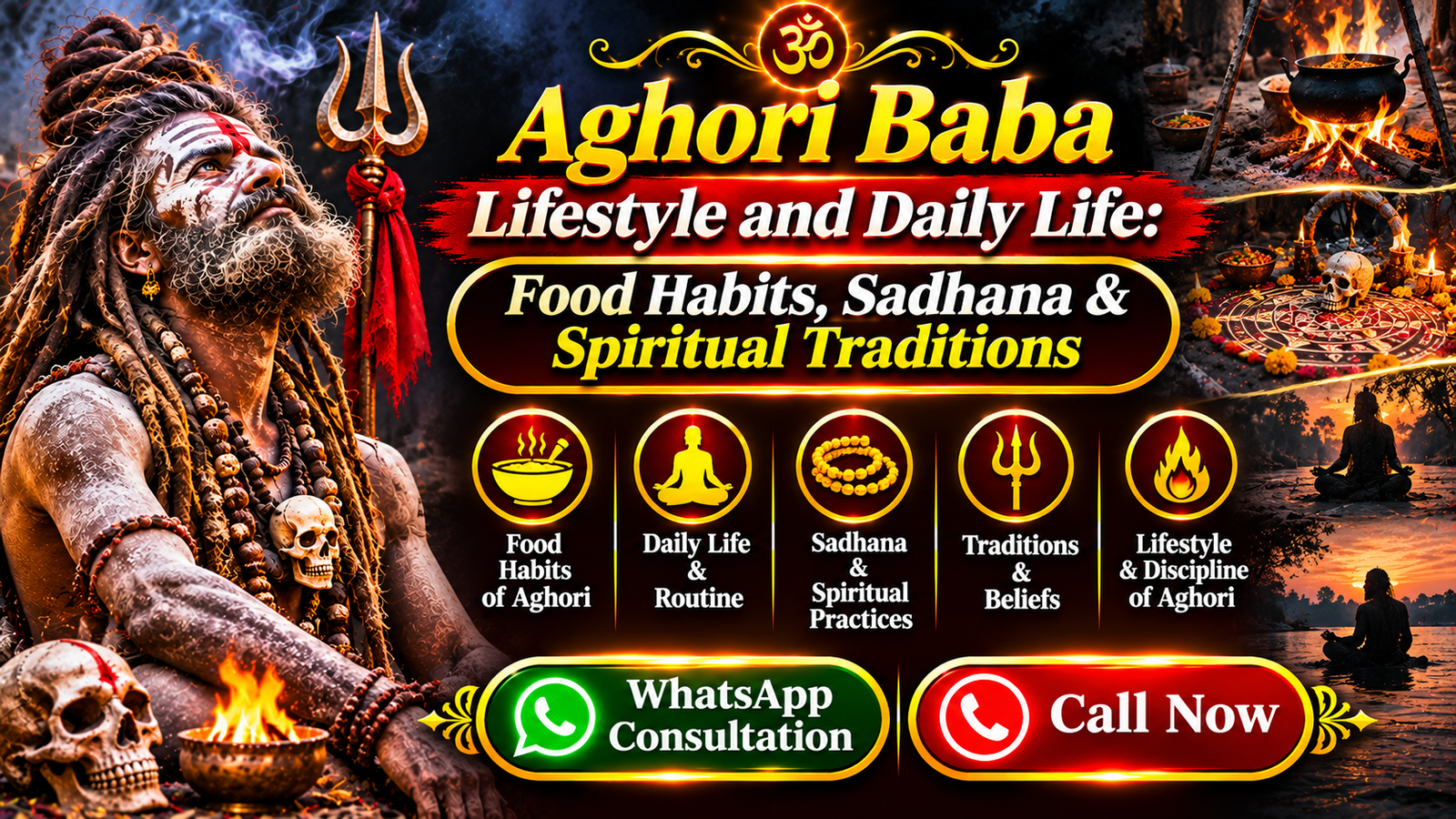
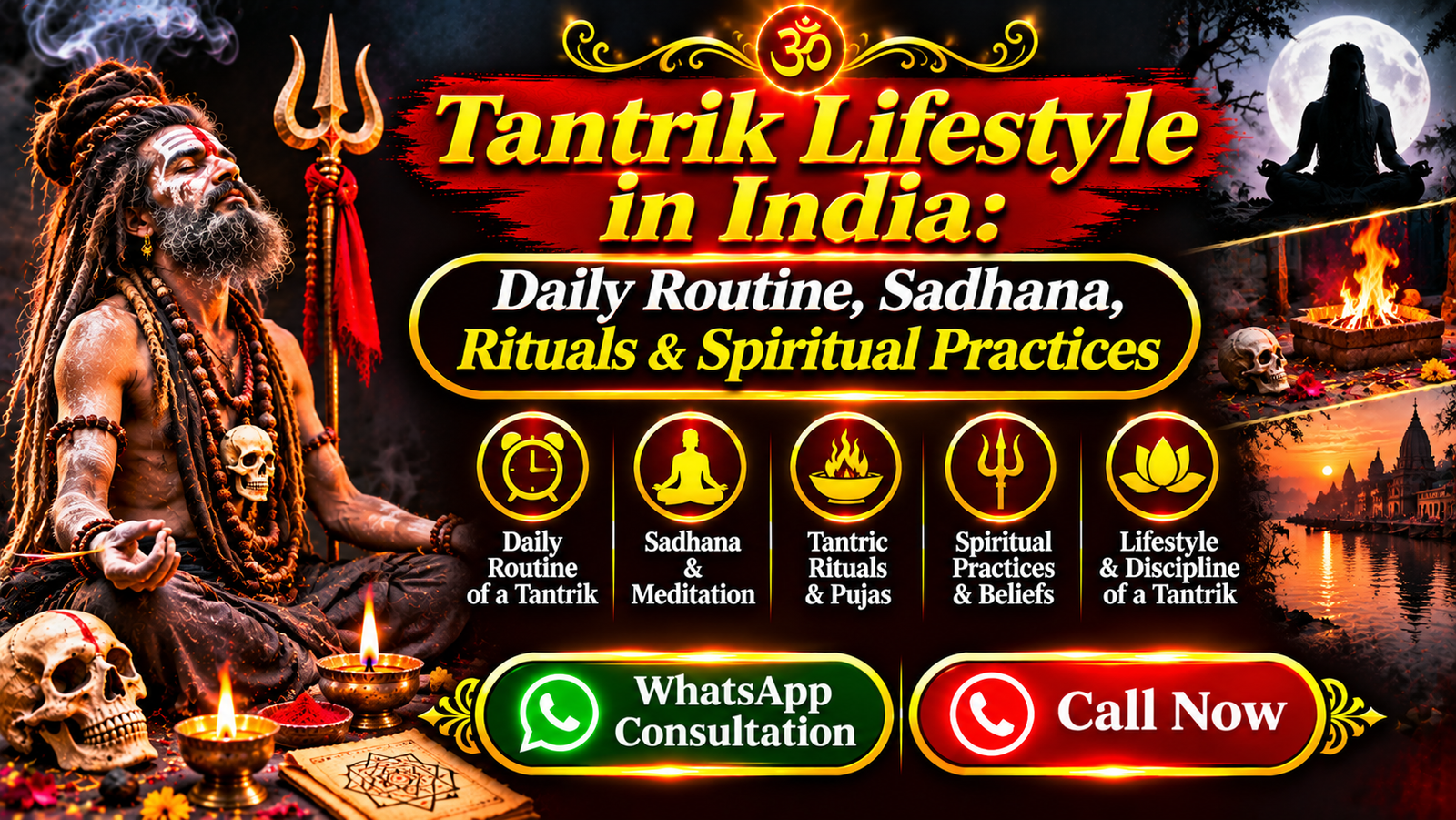
The Tantrik lifestyle in India is associated with ancient spiritual traditions, meditation, mantra practices, discipline and different forms of Sadhana. A Tantrik’s way of life can vary according to their spiritual lineage, teacher, personal beliefs and chosen path. Some follow a simple life focused on meditation and prayer, while others observe specific traditional rituals and spiritual disciplines.
At www.aghoribabaji.com, we explore the traditional practices, beliefs and cultural aspects connected with Tantrik life. Understanding the Tantrik lifestyle helps readers learn about its daily routine, food habits, clothing, Sadhana and spiritual traditions.
भारत में तांत्रिक जीवनशैली (Tantrik Lifestyle) प्राचीन आध्यात्मिक परंपराओं, ध्यान, मंत्र साधना, अनुशासन और विभिन्न साधनाओं से जुड़ी हुई है। हर तांत्रिक का जीवन एक जैसा नहीं होता। उनकी जीवनशैली उनके गुरु, परंपरा, व्यक्तिगत मान्यताओं और साधना के मार्ग के अनुसार अलग-अलग हो सकती है। कुछ तांत्रिक सादा जीवन जीते हुए ध्यान और पूजा पर ध्यान देते हैं, जबकि कुछ विशेष पारंपरिक अनुष्ठानों का पालन करते हैं।
www.aghoribabaji.com पर आप तांत्रिक जीवन, साधना, दैनिक दिनचर्या, खान-पान और आध्यात्मिक परंपराओं से जुड़ी जानकारी पढ़ सकते हैं।
Table of Contents
| No. | Topics |
|---|---|
| 1 | What Is the Tantrik Lifestyle? |
| 2 | Daily Routine of a Tantrik |
| 3 | Tantrik Sadhana and Meditation |
| 4 | Tantrik Mantra and Prayer Practices |
| 5 | Tantrik Food Habits and Lifestyle |
| 6 | Clothing and Appearance of a Tantrik |
| 7 | Tantrik Rituals and Traditional Practices |
| 8 | Different Paths of Tantrik Tradition |
| 9 | Tantrik Lifestyle in Modern India |
| 10 | Frequently Asked Questions |
What Is the Tantrik Lifestyle?
The Tantrik lifestyle refers to a way of living influenced by Tantra, a diverse collection of Indian spiritual traditions. It can involve mantra recitation, meditation, worship, disciplined routines, study of spiritual teachings and guidance from a qualified Guru.
Tantra is not a single uniform practice. Different traditions have their own methods, philosophies, deities and approaches to spiritual development. Some practitioners live ordinary household lives, while others choose a more renounced or ascetic lifestyle.
तांत्रिक जीवनशैली क्या है?
तांत्रिक जीवनशैली का संबंध तंत्र से जुड़ी भारतीय आध्यात्मिक परंपराओं से है। इसमें मंत्र जाप, ध्यान, पूजा, नियमित दिनचर्या, धार्मिक अध्ययन और गुरु के मार्गदर्शन को महत्व दिया जा सकता है।
तंत्र कोई एक समान पद्धति नहीं है। इसकी अलग-अलग परंपराओं में पूजा, साधना, दर्शन और आध्यात्मिक विकास के तरीके अलग हो सकते हैं। कुछ साधक सामान्य पारिवारिक जीवन जीते हैं, जबकि कुछ संन्यास या तपस्वी जीवन अपनाते हैं।
Daily Routine of a Tantrik
A Tantrik’s daily routine depends on their tradition and personal spiritual commitments. There is no single timetable followed by every practitioner. However, certain activities are commonly associated with a disciplined spiritual routine.
1. Early Morning Prayer
Some practitioners begin their day early with bathing, prayer, meditation or worship. Morning hours are often considered suitable for quiet reflection and spiritual practice.
2. Mantra Recitation
Mantra recitation is an important part of many Tantrik traditions. Practitioners may repeat a mantra according to the instructions of their Guru or the rules of their particular tradition.
3. Meditation and Self-Discipline
Meditation helps practitioners develop concentration and awareness. Maintaining discipline in daily activities, speech and personal conduct may also be an important part of their spiritual routine.
4. Evening Worship
Some practitioners perform evening prayers, light a diya or participate in other devotional activities. The specific practice depends on their religious tradition.
तांत्रिक की दैनिक दिनचर्या
तांत्रिक की दिनचर्या उनकी परंपरा और व्यक्तिगत साधना पर निर्भर करती है। हर साधक का समय और अभ्यास अलग हो सकता है। फिर भी कुछ गतिविधियाँ सामान्य रूप से तांत्रिक जीवन से जुड़ी मानी जाती हैं।
- सुबह की पूजा: कुछ साधक सुबह जल्दी उठकर स्नान, ध्यान और पूजा करते हैं।
- मंत्र जाप: अपनी परंपरा और गुरु के निर्देशों के अनुसार मंत्रों का जाप किया जा सकता है।
- ध्यान और अनुशासन: एकाग्रता, आत्मचिंतन और नियमित जीवनशैली पर ध्यान दिया जाता है।
- शाम की आरती या पूजा: कुछ साधक शाम को दीपक जलाकर प्रार्थना और पूजा करते हैं।
Tantrik Sadhana and Meditation
Tantrik Sadhana is one of the central elements of many Tantra traditions. The word Sadhana generally refers to a structured spiritual discipline performed with dedication and consistency.
Depending on the tradition, Sadhana may include meditation, mantra recitation, devotional worship, study of sacred texts and other prescribed practices. Some forms require initiation and guidance from an experienced Guru.
Meditation is also used to develop mental concentration, patience and self-awareness. The purpose and method of each practice can differ considerably between Tantrik lineages.
तांत्रिक साधना और ध्यान
तांत्रिक परंपराओं में साधना को महत्वपूर्ण स्थान दिया जाता है। साधना का अर्थ किसी आध्यात्मिक उद्देश्य के लिए नियमित रूप से अनुशासित अभ्यास करना है।
अलग-अलग परंपराओं में साधना के अंतर्गत ध्यान, मंत्र जाप, देवी-देवताओं की पूजा, धार्मिक ग्रंथों का अध्ययन और अन्य निर्धारित विधियाँ शामिल हो सकती हैं। कुछ साधनाओं के लिए गुरु से दीक्षा और उचित मार्गदर्शन आवश्यक माना जाता है।
ध्यान के माध्यम से साधक एकाग्रता, धैर्य और आत्म-जागरूकता विकसित करने का प्रयास करते हैं।
Tantrik Mantra and Prayer Practices
Mantras are an important feature of several Tantrik traditions. A mantra may consist of sacred syllables, names of deities or longer devotional verses. Practitioners may use prayer beads, maintain a regular time for recitation and follow instructions associated with their lineage.
Different mantras are connected with different deities and spiritual traditions. Their meaning and use should be understood in their religious and cultural context rather than through exaggerated claims about guaranteed results.
तांत्रिक मंत्र और प्रार्थना की परंपराएँ
कई तांत्रिक परंपराओं में मंत्रों का विशेष महत्व होता है। मंत्र में पवित्र अक्षर, देवी-देवताओं के नाम या लंबे धार्मिक श्लोक शामिल हो सकते हैं। साधक माला से जाप कर सकते हैं और अपनी परंपरा के अनुसार नियमित समय निर्धारित कर सकते हैं।
अलग-अलग मंत्र अलग देवी-देवताओं और आध्यात्मिक परंपराओं से जुड़े होते हैं। उनके अर्थ और उपयोग को धार्मिक तथा सांस्कृतिक संदर्भ में समझना चाहिए।
Tantrik Food Habits and Lifestyle
There is no single food rule followed by every Tantrik. Food habits vary according to the individual’s tradition, religious commitments, health needs and personal choices.
Some practitioners prefer a simple vegetarian diet, while others follow different traditional dietary customs. Fasting may also be observed on particular religious occasions or during specific devotional practices.
A disciplined lifestyle may include regular meals, adequate rest, personal cleanliness and moderation in daily habits.
तांत्रिक खान-पान और जीवनशैली
हर तांत्रिक के खान-पान के नियम एक जैसे नहीं होते। भोजन की आदतें उनकी धार्मिक परंपरा, साधना, स्वास्थ्य और व्यक्तिगत पसंद के अनुसार अलग हो सकती हैं।
कुछ साधक सात्विक और शाकाहारी भोजन पसंद करते हैं, जबकि कुछ अन्य परंपराओं के अनुसार अलग भोजन पद्धतियों का पालन करते हैं। विशेष धार्मिक अवसरों पर व्रत रखना भी कुछ साधकों की दिनचर्या का हिस्सा हो सकता है।
अनुशासित जीवनशैली में समय पर भोजन, पर्याप्त आराम, स्वच्छता और संतुलित आदतों को महत्व दिया जा सकता है।
Clothing and Appearance of a Tantrik
The appearance of a Tantrik can vary widely. Some practitioners wear simple cotton or saffron-coloured clothing, while others follow the dress customs of their particular religious order.
Certain traditions use religious symbols, rudraksha beads, prayer malas or tilak as part of devotional identity. However, clothing alone cannot establish whether someone is a genuine spiritual practitioner.
तांत्रिक के कपड़े और बाहरी रूप
तांत्रिक का पहनावा उनकी परंपरा के अनुसार अलग-अलग हो सकता है। कुछ साधक साधारण सूती या भगवा वस्त्र पहनते हैं, जबकि कुछ अपनी धार्मिक परंपरा के विशेष वस्त्रों का उपयोग करते हैं।
कई साधक रुद्राक्ष की माला, जप माला, तिलक या अन्य धार्मिक प्रतीकों को धारण करते हैं। केवल कपड़ों या बाहरी रूप के आधार पर किसी व्यक्ति की आध्यात्मिक योग्यता तय नहीं की जा सकती।
Tantrik Rituals and Traditional Practices
Tantrik rituals are diverse and depend on the spiritual lineage being followed. They may include worship, offerings, mantra recitation, meditation and observances connected with particular festivals or religious occasions.
Some traditions place importance on Shakti worship, while others focus on Shiva or different forms of the Divine. Rituals may be performed at temples, homes or designated spiritual locations, depending on the practice.
Certain specialised rituals are traditionally performed only after initiation and under the guidance of a qualified teacher. It is important to understand their cultural and religious significance instead of assuming that every Tantrik follows the same ritual system.
तांत्रिक अनुष्ठान और पारंपरिक विधियाँ
तांत्रिक अनुष्ठान अलग-अलग आध्यात्मिक परंपराओं के अनुसार किए जाते हैं। इनमें पूजा, अर्पण, मंत्र जाप, ध्यान और विशेष धार्मिक अवसरों से जुड़ी विधियाँ शामिल हो सकती हैं।
कुछ परंपराओं में शक्ति उपासना को महत्व दिया जाता है, जबकि अन्य में भगवान शिव या दिव्य शक्ति के अलग-अलग स्वरूपों की पूजा की जाती है। कुछ विशेष अनुष्ठान गुरु से दीक्षा और मार्गदर्शन प्राप्त करने के बाद ही किए जाते हैं।
Different Paths of Tantrik Tradition
Tantra includes several traditions and approaches. These should not be treated as identical, because their philosophies, rituals and spiritual goals may differ.
1. Shaiva Tantra
Shaiva Tantra is associated with the worship of Lord Shiva and spiritual philosophies connected with Shaivism.
2. Shakta Tantra
Shakta traditions focus on the worship of Shakti, the Divine Feminine, and different forms of the Goddess.
3. Aghora Tradition
Aghora is a distinct spiritual tradition associated with Shiva and a philosophy of overcoming social and mental divisions. Its practices and teachings should be understood through their own historical and religious context.
4. Householder Tantrik Tradition
Not every Tantrik lives as an ascetic. Some practitioners follow spiritual disciplines while maintaining family responsibilities, employment and everyday social life.
तांत्रिक परंपराओं के अलग-अलग मार्ग
तंत्र में कई आध्यात्मिक परंपराएँ और मार्ग शामिल हैं। इनके दर्शन, पूजा विधियाँ और आध्यात्मिक उद्देश्य अलग-अलग हो सकते हैं।
- शैव तंत्र: भगवान शिव की उपासना और शैव दर्शन से जुड़ी परंपराएँ।
- शाक्त तंत्र: आदिशक्ति और देवी के विभिन्न स्वरूपों की उपासना पर आधारित परंपराएँ।
- अघोर परंपरा: भगवान शिव से जुड़ी एक विशिष्ट आध्यात्मिक परंपरा, जिसमें सामाजिक और मानसिक भेदभाव से ऊपर उठने की शिक्षा पर जोर दिया जाता है।
- गृहस्थ तांत्रिक परंपरा: कुछ साधक परिवार और सामान्य सामाजिक जीवन के साथ आध्यात्मिक अभ्यास भी करते हैं।
Tantrik Lifestyle in Modern India
The Tantrik lifestyle continues to attract interest in modern India because of its connection with ancient spiritual traditions, religious practices and cultural history.
Today, people encounter Tantra through religious books, temples, spiritual teachers, cultural discussions and online educational resources. However, popular descriptions sometimes mix traditional teachings with myths and exaggerated stories.
A better understanding comes from studying the history of Tantra, learning about different traditions and approaching spiritual practices with patience and respect.
At www.aghoribabaji.com, readers can explore articles about Aghori traditions, Tantrik lifestyle, spiritual practices, mantra traditions and India’s wider spiritual heritage.
आधुनिक भारत में तांत्रिक जीवनशैली
आज भी भारत में तांत्रिक जीवनशैली और तंत्र परंपराओं के प्रति लोगों की रुचि बनी हुई है। इसका संबंध प्राचीन आध्यात्मिक मान्यताओं, धार्मिक अभ्यासों और भारतीय सांस्कृतिक इतिहास से है।
आज लोग तंत्र के बारे में धार्मिक पुस्तकों, मंदिरों, आध्यात्मिक गुरुओं, सांस्कृतिक चर्चाओं और ऑनलाइन लेखों के माध्यम से जानकारी प्राप्त करते हैं। हालांकि, लोकप्रिय कहानियों में कई बार पारंपरिक शिक्षाओं के साथ काल्पनिक और बढ़ा-चढ़ाकर बताई गई बातें भी मिल जाती हैं।
तंत्र को बेहतर ढंग से समझने के लिए इसके इतिहास, अलग-अलग परंपराओं और आध्यात्मिक संदर्भों का अध्ययन करना उपयोगी है।
Frequently Asked Questions
1. What is the lifestyle of a Tantrik?
A Tantrik lifestyle may include meditation, mantra recitation, worship, spiritual study and disciplined daily habits. The exact routine depends on the practitioner’s tradition.
तांत्रिक की जीवनशैली कैसी होती है?
तांत्रिक जीवनशैली में ध्यान, मंत्र जाप, पूजा, आध्यात्मिक अध्ययन और अनुशासित दिनचर्या शामिल हो सकती है। यह उनकी परंपरा पर निर्भर करती है।
2. Do all Tantriks live in forests or temples?
No. Some practitioners live in monasteries, temples or secluded places, while others maintain ordinary household and professional lives.
क्या सभी तांत्रिक जंगलों या मंदिरों में रहते हैं?
नहीं। कुछ साधक आश्रम, मंदिर या एकांत स्थानों पर रहते हैं, जबकि कई लोग परिवार और सामान्य सामाजिक जीवन के साथ रहते हैं।
3. What do Tantriks eat?
There is no universal Tantrik diet. Some follow vegetarian food habits, while others follow the dietary customs of their own tradition.
तांत्रिक क्या खाते हैं?
सभी तांत्रिकों का भोजन एक जैसा नहीं होता। कुछ शाकाहारी भोजन करते हैं, जबकि कुछ अपनी परंपरा के अनुसार अलग खान-पान अपनाते हैं।
4. Is meditation important in Tantrik Sadhana?
Meditation is an important practice in many Tantrik traditions. It may help practitioners develop concentration, awareness and discipline.
क्या तांत्रिक साधना में ध्यान जरूरी है?
कई तांत्रिक परंपराओं में ध्यान महत्वपूर्ण माना जाता है। इससे एकाग्रता, जागरूकता और अनुशासन विकसित करने में सहायता मिल सकती है।
5. Is every Tantrik an Aghori?
No. Aghora is a distinct spiritual tradition. Not every Tantrik follows Aghora, and not every practitioner has the same lifestyle or practices.
क्या हर तांत्रिक अघोरी होता है?
नहीं। अघोर एक विशिष्ट आध्यात्मिक परंपरा है। हर तांत्रिक अघोर परंपरा का पालन नहीं करता और सभी साधकों की जीवनशैली एक जैसी नहीं होती।
6. Can a householder follow Tantrik traditions?
Some Tantrik traditions include household practitioners who maintain family responsibilities while following spiritual disciplines.
क्या गृहस्थ व्यक्ति तांत्रिक परंपराओं का पालन कर सकता है?
हाँ। कुछ तांत्रिक परंपराओं में ऐसे साधक भी होते हैं जो परिवार और सामान्य जीवन की जिम्मेदारियों के साथ आध्यात्मिक अभ्यास करते हैं।
Conclusion: Understanding the Tantrik Lifestyle
The Tantrik lifestyle in India is diverse and deeply connected with the country’s spiritual and religious heritage. It may involve Sadhana, meditation, mantra recitation, worship, traditional rituals and personal discipline. There is no single lifestyle that represents every Tantrik or every Tantra tradition.
Learning about these practices through their cultural, historical and spiritual context helps create a clearer understanding of Tantrik life. Explore more articles about Aghori traditions, Tantrik Sadhana and Indian spiritual practices at www.aghoribabaji.com.
निष्कर्ष: तांत्रिक जीवनशैली को समझना
भारत में तांत्रिक जीवनशैली विविध और आध्यात्मिक परंपराओं से जुड़ी हुई है। इसमें साधना, ध्यान, मंत्र जाप, पूजा, पारंपरिक अनुष्ठान और व्यक्तिगत अनुशासन को महत्व दिया जा सकता है। हर तांत्रिक या हर तंत्र परंपरा की जीवनशैली एक जैसी नहीं होती।
इन परंपराओं को उनके सांस्कृतिक, ऐतिहासिक और आध्यात्मिक संदर्भ में समझना तांत्रिक जीवन के बारे में सही जानकारी प्राप्त करने का बेहतर तरीका है। अघोर परंपरा, तांत्रिक साधना और भारतीय आध्यात्मिक जीवन से जुड़े अन्य लेख पढ़ने के लिए www.aghoribabaji.com पर जाएँ।